


ESPN has spent the past several years trying to navigate — often awkwardly and inconsistently — the delicate balance between discussing sports, politics and social issues.
There has been criticism from both inside and outside the company. Sometimes because of accusations that it has avoided politics. Sometimes because it’s been accused of wading too far into politics and social causes.
This past Saturday, one of the network’s most popular shows waded into a political fight over the future of college sports. The result was severe backlash.
Not because it talked about politics. But because critics said the conversation was far from fair and balanced. In fact, it sounded more like advocacy than an informative conversation.
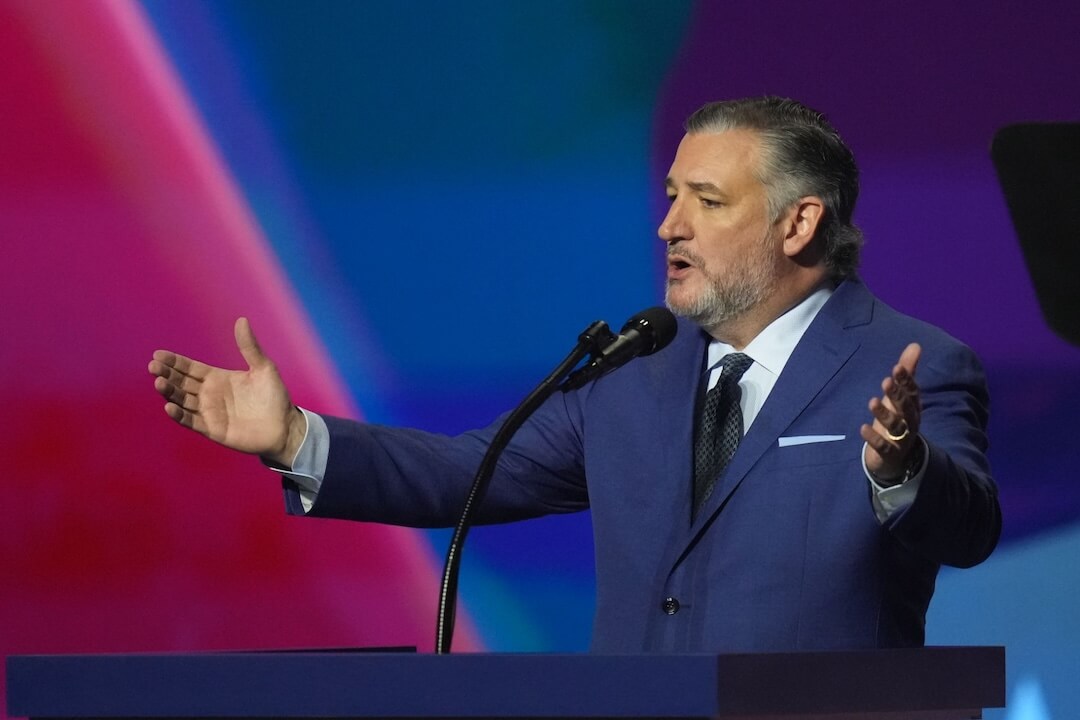
It started with ESPN’s “College GameDay” pregame coverage from Austin, Texas — where the big showdown of the day was No. 1 Ohio State vs. No. 4 Texas. “GameDay” controversially ran a live, on-set interview with Texas Republican Sen. Ted Cruz, the lead sponsor of a bill called the Protect College Sports Act — legislation that would regulate the big business of college sports. Cruz was interviewed on set by “GameDay” host Rece Davis for nearly 10 minutes and gave his full-throated support for the bill, which could be voted on soon.
Despite wearing University of Texas colors, Cruz was booed by the Texas crowd with chants of “You suck, Ted!” But the controversy wasn’t necessarily because ESPN welcomed a divisive political figure. It was that the show gave airtime to only one side of the college sports argument. Just a week ago, “GameDay” co-hosts Pat McAfee and Nick Saban urged Congress to pass the bill on air.
Awful Announcing’s Sean Keeley wrote, “Even by the standards of ‘College GameDay,’ which has been known to put its thumb on the scale when it wanted, this whole affair has been wildly inappropriate. It’s one thing for (‘GameDay’ co-host) Kirk Herbstreit to chastise football players for opting out of meaningless bowl games; it’s another thing for the show to put its full weight behind a Congressional bill without providing ample time to those proponents and opponents, especially when those who oppose the bill do so on the grounds that it will negatively impact the earning ability of the athletes who make the sport work.”
And, yes, there are plenty who oppose the bill.
ProFootballTalk’s Mike Florio put it this way: “Those who are speaking out in support of the bill won’t admit it. We’ll do it for them. Under the guise of ending chaos tracing to decades of antitrust violations that denied the players the ability to earn anything for their skills, sacrifices, and fame, the proponents of the bill want to limit the amount of money that goes to players, diverting it to the programs.”
Florio added, “Unwilling to embrace a nationwide union that would allow the creation of a salary cap, transfer limits, and other rules aimed at creating order, the powers-that-be crave an exemption from the laws that prevent the universities from coming together and crafting anticompetitive — and anticapitalist — restrictions on the players’ earning power and freedom to transfer. And ESPN has been leading the conga line, with influential voices like Nick Saban and Pat McAfee openly pushing the Protect College Sports Act.”
ESPN’s interview with Cruz added to the idea that the network is pushing for the bill.
Former ESPN personality Jemele Hill tweeted, “Did not know ESPN had become a political lobbying firm.”
As for the argument that ESPN should talk about this important topic, former ESPN personality Bomani Jones tweeted, “Talking about it and shilling for it — without disclosing that the company is literally lobbying for it — are vastly different things.”
The Athletic’s Justin Williams and Stewart Mandel dug into the matter and wrote that “an ESPN source told The Athletic that Cruz, who was in Austin for the game, expressed interest in coming on the show to discuss the legislation. That source called it an ‘easy decision’ given the timeliness and relevance to college football, and added that ‘GameDay’ had not received any requests from a senator or other figure (like a coach or athletic director) opposed to the legislation — but would ‘obviously do the same’ if it received such a request.”
If that’s true, it’s a pretty lame — and irresponsible — excuse from ESPN to suggest that the only people who get airtime are those who actually request it. If ESPN is going to give Cruz nearly 10 minutes to advocate for the bill, it has the responsibility to seek out its opponents, especially because finding them wouldn’t be difficult.
For what it’s worth, the NAACP tweeted, “Surprised @espn so willing lent their platform to political performance today. But we’ll play. We’d love to have @DerrickNAACP join you in his home state of Miss. next week to express why the Protect College Sports Act is dangerous to Black Athletes and the Black community.”
OK, there you go: a request for NAACP president Derrick Johnson to come on “GameDay.”
One final thing I should mention: Awful Announcing’s Matt Yoder wrote, “It’s incredibly ironic that ESPN would give an unopposed platform to a Republican senator from Texas to talk about politics in the very same week when ABC cowered away from airing a Jimmy Kimmel interview with a Democratic Senate candidate, James Talarico, and was forced to air it on YouTube thanks to threats from the federal government.”
After often being hesitant to delve into politics, ESPN seems to be fully embracing this topic.
Yoder added, “Is it because they have something to gain themselves from the legislation and the impact it would have on college athletics? And could you imagine the reaction if ESPN interviewed union leaders and Congressional Black Caucus representatives about their thoughts on the bill? These are all legitimate questions the network has opened itself up to now that it has chosen to dive headfirst into these political waters. But whatever the reason, ESPN deciding to use one of its most popular shows as a political platform is truly unexplainable.”
There was another viral moment during ABC/ESPN’s college football coverage Saturday night. Following Texas’ remarkable come-from-behind victory against Ohio State, longtime ESPN sideline reporter Holly Rowe tried to interview Texas coach Steve Sarkisian.
Rowe started talking amid the chaos on the field, saying, “Coach, this was one of the most …”
Sarkisian cut her off, and it sounded as if he said, “Let’s go, Texas fight! Let’s go, Texas fight! Hook ‘em!”
Then Sarkisian abruptly walked away, leaving Rowe visibly annoyed. She rolled her eyes and walked in the other direction.
There’s more. Sarkisian had an odd halftime interaction with ESPN’s other sideline reporter, Laura Rutledge, who tried to interview him before technical difficulties led Sarkisian to walk away.
Rutledge later explained on air, “I do want to make sure we clear something up: (Sarkisian) did decline the interview at the half. He had waited a long time, been very patient with some technical issues that we had. He apologized to us. We should be apologizing to him, which we did.”
The Athletic’s Christopher Kamrani wrote, “According to a Texas spokesperson, ESPN’s technical difficulties arose once again on the field postgame, which played a role in Sarkisian’s demeanor with Rowe.”
I saw the ending of this game. ESPN went to Rowe quickly after it ended, so I’m not sure I’m buying the excuse that ESPN’s technical difficulties arose again.
Whatever the case, it was a bad look for Sarkisian, who used one of the biggest victories of his career to disrespectfully make one of ESPN’s most respected personalities look foolish. Rowe didn’t deserve that.
“60 Minutes” correspondent Norah O’Donnell interviews the U.S. Air Force officer shot down in Iran, and later rescued, last April. (Courtesy of CBS News)
The much-anticipated season premiere of “60 Minutes” aired Sunday night and, honestly, it looked like, well, “60 Minutes.”
It was a tumultuous summer for the most iconic newsmagazine show in TV history. Three veteran correspondents were fired. So was the executive producer who had been with the program for decades. Another correspondent was hired: Ross Douthat, a conservative New York Times opinion writer with no experience as a TV journalist. The other big change, made by controversial CBS News editor-in-chief Bari Weiss, was hiring Nick Bolton, someone with no real TV news experience, as executive producer.
In addition, some of those who have left the show accused Weiss of attempting to inject political bias or falsehoods into their reporting last season.
That was the backdrop as the 59th season of the program got underway Sunday night. With a slightly revamped ticking stopwatch that is the show’s “theme,” the opening of “60 Minutes” introduced five full-time correspondents: Douthat, Lesley Stahl, Jon Wertheim, Bill Whitaker and Norah O’Donnell.
The show had three features. The opener was O’Donnell’s story on the U.S. Air Force officer shot down in Iran last April and how he was rescued by the military. The feature included a compelling interview with the officer, as well as conversations with Joint Chiefs Chairman Gen. Dan Caine, Defense Secretary Pete Hegseth and U.S. Central Command chief Adm. Brad Cooper. It also included declassified footage of a portion of the rescue.
There’s no question that the story was very pro-U.S. military, showing the bravery of the officer shot down and the expertise of his rescuers. But there’s also no question that it was an interesting and newsworthy story.
Stahl was the correspondent on the juiciest segment: a hidden camera investigation that reported on lawyers and lobbyists who are part of the “pardon economy” — that is, those who sell their ties to the president to “help” people seeking presidential pardons.
Finally, Wertheim did the lighter story of the premiere: a feature on the Super Bowl-favorite Los Angeles Rams.
The show ended with a segment called “The Last Minute.” Douthat appeared on set and said, “We’ll be chasing a lot of stories this season, but right now, no story looms larger than the latest development in artificial intelligence.” Douthat then talked a bit more about recent developments in AI and concluded by speaking about the need for trust in journalism.
In the end, it was a solid and respectable — although not necessarily spectacular — premiere. We’ll see what the rest of the season has in store.
The New York Times’ Jim Rutenberg and Maggie Haberman have a chilling new story: “How Trump Is Wielding Power to Stifle Speech.”
Rutenberg and Haberman wrote, “Almost 20 months into Mr. Trump’s second term, his long-running media clashes have grown into a sweeping campaign to control speech in America that stands out for applying so many levers, so fast, all at once. Driven by personal pique, fury over leaks and a determination to shape the political narrative to his advantage, Mr. Trump is deploying the might of the federal government and filing personal lawsuits — targeting not just journalists and liberal critics, but also comedians and talk show hosts, and the corporate entities behind them.”
Trump’s attacks on the press have been unrelenting since regaining the White House. He has banned reporters, issued subpoenas seeking to uncover sources, threatened broadcasters’ licenses, asked the Federal Communications Commission to launch investigations, and spewed out a steady stream of insults.
The White House defends Trump’s actions, essentially saying he is striking back against biased reporting and so-called fake news. However, the Times writes, “Free speech advocates say the president’s intent is apparent: to punish, intimidate and silence dissenters.”
My colleague, Angela Fu, has been tracking many of our government’s actions under Trump in Poynter’s Press Freedom Watch.
Rutenberg and Haberman’s story for the Times also revealed, for the first time, another reason for Trump’s pettiness toward The Associated Press. The AP was banned from some Trump media appearances because it continued to use the term “Gulf of Mexico” instead of what Trump wants it called: the “Gulf of America.”
But apparently there was an additional reason.
The Times wrote, “The A.P. would not give the Trump team rights to its photo of Mr. Trump, bloodied with a raised fist, after he was shot in Butler, Pa., in 2024. At a private lunch with Mr. Trump and network anchors last year, White House aides tied the A.P. ban to the denial of the rights to the photo, according to two people briefed on the event.”
Last week was full of somber and inspiring features about the 25th anniversary of the 9/11 attacks. Here are the pertinent closing thoughts of Friday’s “NBC Nightly News” from anchor Tom Llamas:
It’s up to each one of us to embrace the mantra “never forget,” but now carry a new one: We must teach.
Teach about the extremism that led to the murder of thousands.
Teach about those who rushed into buildings-turned-infernos because it was their duty to help.
Teach about the heroism of the passengers on a hijacked plane who fought back, giving their own lives to save others.
Teach about those who worked on recovery and cleanup on the sites of the attacks and the impact on their lives years later because of that toxic dust.
And teach about those who enlisted after 9/11, answering that patriotic call to serve in wars that would last decades.
The Emmy Awards, honoring the best in TV, are tonight. (8 p.m. Eastern on NBC and Peacock). Here’s The New York Times with “Who Should Win an Emmy? Vote for Your Favorites.”
- Build a strong foundation for managing people in our five-day Essential Skills for New Managers, March 1–5, 2027, in St. Petersburg, Florida. Designed for managers with up to three years of experience, the program covers delegation, feedback, difficult conversations, managing up and leading former peers. Apply by Dec. 7.
- Get ahead of the next flood story with a free Poynter Beat Academy webinar on Oct. 8. Learn how to find reliable flood data, identify communities at risk and prepare data-driven coverage before disaster strikes. Enroll now.
- Strengthen your investigative reporting with Will Work for Impact: Fundamentals of Investigative Journalism from Oct. 2-Nov. 3, 2026. Enroll now.
Have feedback or a tip? Email Poynter senior media writer Tom Jones at tjones@poynter.org.
The Poynter Report is your daily dive into the world of media, packed with the latest news and insights. Get it delivered to your inbox Monday through Friday by signing up here. And don’t forget to tune into our biweekly podcast for even more.