


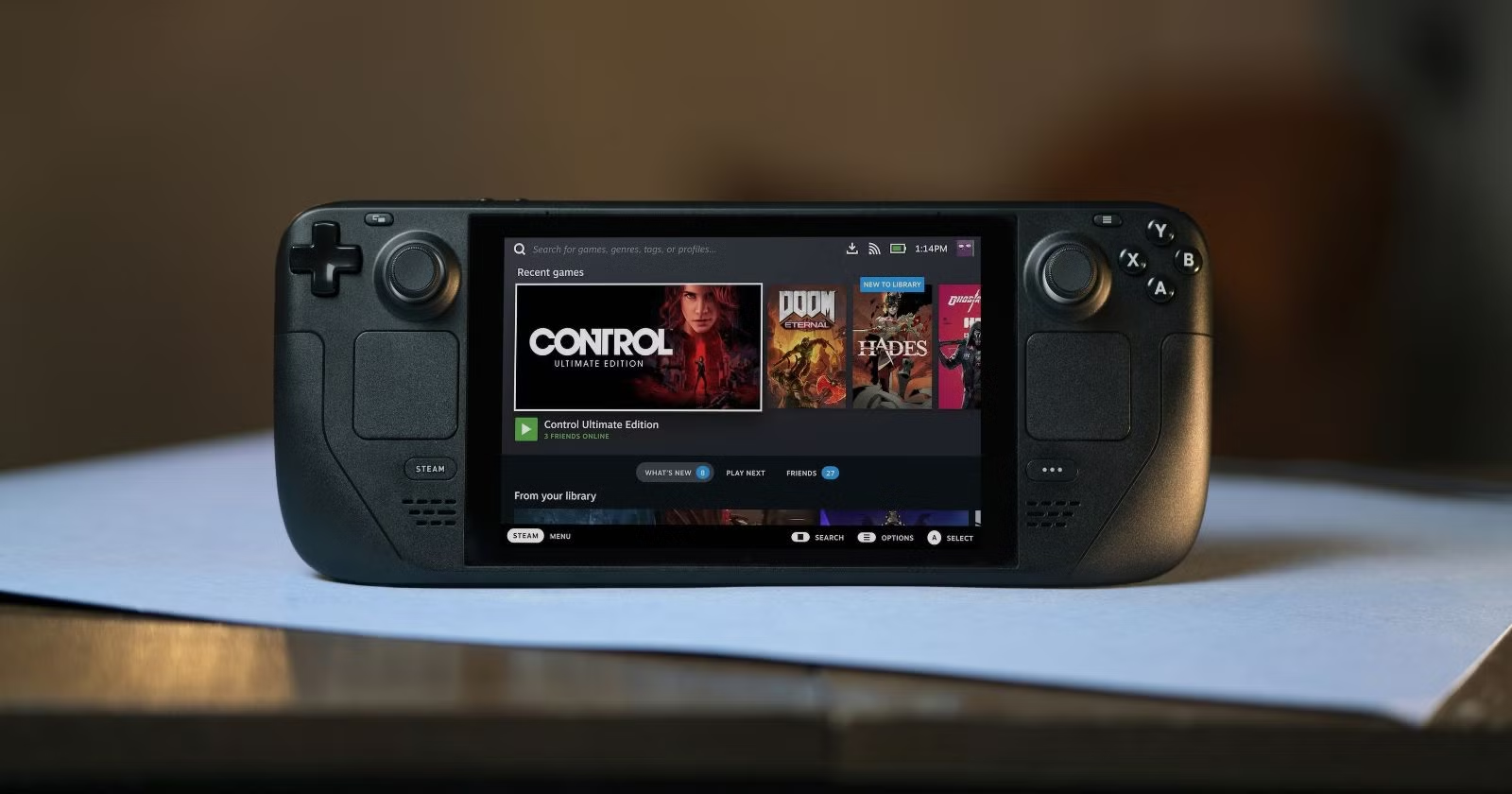
If there’s one problem that has plagued Steam Deck users since its initial launch back in February 2022, it has most definitely been game compatibility. While the list of supported games has only grown over time, there is only so much Proton can do.
Anti-cheat has always been a problem on Linux, and, by extension, the Steam Deck. There’s a lot of games that simply refuse to work on Valve’s handheld gaming PC, and none of that has to do with its “older” hardware spec.
Related
I ditched Windows for SteamOS on my PC, and gaming is way better now
SteamOS is ol’ reliable when I want a Linux-gaming experience at this point.
Make no mistake, the Steam Deck is old now
And way too underpowered for modern AAA releases
The Steam Deck is getting old, and it has been over 4 years since Valve’s handheld gaming PC entered and revolutionized the market. Sure, the concept wasn’t exactly new (with companies like GPD already making gaming handhelds), but it was affordable and powerful enough to be popular at the time.
Handhelds used to be very expensive beasts, and the move from Windows to a more console-centric SteamOS was key to the Deck’s surge in popularity. Times have changed though, and the Steam Deck is neither affordable nor performant enough to recommend to most people anymore.
Most major game releases just don’t run at decent frame rates on the Deck these days, which most definitely has to do with its aging hardware. That said, not all games are created equal, and there have been a number of perfectly playable games that have been artificially blocked from SteamOS, since it is based on Linux.
Kernel-level anti-cheat is becoming quite commonplace in most competitive games, and we’ve somehow come to normalize it.
The Steam Deck is mostly definitely showing its age, and there is simply no amount of frame generation or upscaling that can offset the fact that the hardware is now ancient. Even the mighty Z1 Extreme runs into issues with modern AAA releases these days, although a lot of it can be attributed to the (lack of) optimization in these PC ports.
It’s not like the Steam Deck can’t play most of these games
Install Windows and things just work, though it’s kind of clunky
Image Credit: Jhet BorjaCredit: Jhet Borja / MakeUseOf
Games like Call of Duty and Battlefield mandate reasonably low PC system requirements, and tend to be quite scalable. This makes them surprisingly playable even on potato PCs, and the Steam Deck’s built-in APU is more than enough for the task, especially if you turn down the settings to a reasonable level.
Alas, the kernel-level anti-cheat deployed in these games makes them entirely incompatible with Linux, and you’d be forced to install Windows 11 on the Deck, which is a bit of an involved process and not quite recommended.
Dual booting SteamOS and Windows 11 on the Deck is technically feasible, but involves a series of script tweaks which puts it out of the hands of less technical gamers. Even if you do manage to get it working, Valve’s Windows 11 drivers are known to be quite out-of-date, which can be catastrophic for performance.
Taking into account the fact that Windows 11 on the Steam Deck is a compromised, unintuitive experience, and you have a recipe for disaster. I’d honestly recommend streaming the game to your Deck locally (from a separate Windows 11 gaming setup) instead of installing Windows onto it.
Unfortunately, there is no happy medium for a solution here. Until developers choose not to willingly gate keep Linux users, things will never change. And it’s not like anti-cheat doesn’t work on Linux — there’s a plethora of free-to-play titles that just work nowadays. Restricting access is a deliberate choice, and one that alienates legitimate players for no reason at all.
Steam Deck specific locks are (hopefully) not the way forward
Interestingly enough, there has been some kind of progress toward making these games work under Linux, even if they bring with them some rather gnarly limitations. This involves juggling through custom Proton versions, and enabling certain use flags to get the game up and running.
I worry that this might end up locking the game to work with only verified Proton installations, although this is (hopefully) unlikely. Locking games to a specific set of requirements is an arguably worse solution, and is in no way effective, since there have been ways to bypass these “locks.” Not to mention, it also sets a very dangerous precedent, one where Valve has access to the keys and no one else. This kind of restriction irks me.
Gaming is all about accessibility, and locking titles down to a platform — Windows, Linux or otherwise — is a very unfortunate trend that needs to stop. Until then, I’ll be happily playing through my library of never-ending single-player titles without much worry.