


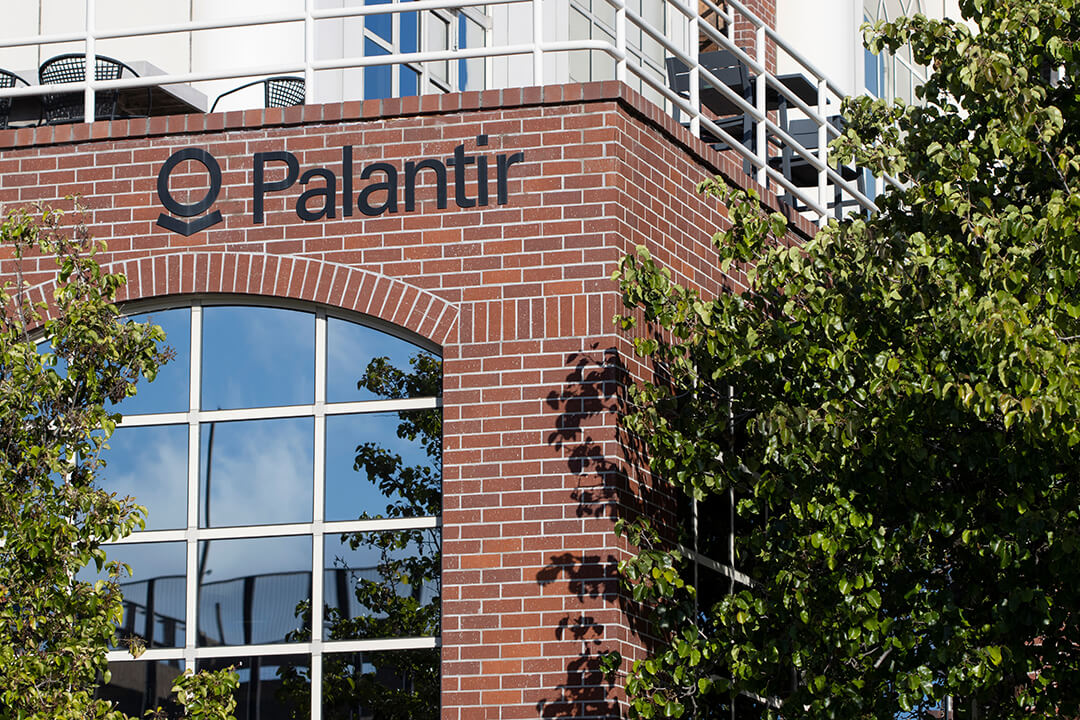
USA Today Co., the largest newspaper chain in the country, announced Thursday that it is partnering with technology company Palantir to better monetize its customer data.
The news came during USA Today Co.’s second-quarter earnings call, when CEO Mike Reed revealed that the company would use Palantir’s artificial intelligence and software to analyze the data USA Today Co. receives from its customers and readers. With information gained from that analysis, the company can then predict the best way to make money from those consumers by, for example, showing an advertisement tailored to a specific consumer’s interests or offering a subscription at a price a consumer would likely accept.
In the past, the company mostly matched affiliate links for products to stories manually, according to USA Today Media president Kristin Roberts. Working with Palantir, USA Today Co. and its papers — which include The Arizona Republic, Detroit Free Press and other major dailies — plan to automate that matching process and expand it across much more of their content.
“What may take us a considerable amount of time to build internally, we can do in a matter of weeks or months with Palantir,” Reed said.
Palantir has attracted controversy over its partnerships with the U.S. government, including contracts with Immigration and Customs Enforcement and the Department of Defense. Critics say Palantir’s technology has helped the government wage military campaigns, identify targets for immigration raids and surveil Americans.
USA Today Co.’s journalists have reported on some of these issues. A May 2025 USA Today story, for example, found that Palantir won a $30 million no-bid contract to help ICE “build a sophisticated system to prioritize people for deportation.”
Reed said that though the company will use Palantir’s tools on its data, the data will remain the property of USA Today Co.
“All of our data remains our data,” Reed said. “It’s our data. The actions and the intelligence that we utilize takes place on our platform. It’s our (intellectual property). It’s our outcomes.”
USA Today Co. spokesperson Lark-Marie Antón wrote in an email that the company’s editorial decisions would remain independent and that the company adheres to data protection and privacy laws and requires its partners to maintain strong data security standards.
“Through our work with Palantir, we’re leveraging AI to create a unified intelligence layer to better serve our expansive audience, deepen engagement, and drive growth across subscriptions, advertising, and e-commerce,” Antón wrote.
It is unclear how much the deal is worth or how long it will last. Antón declined to answer questions about the specifics of the partnership and instead referred to the earnings call and accompanying release. During the call, Reed said he hoped he could update investors with more specific predictions of how much money the company expects to make from the partnership during the next quarter or two.
“We think there’s upside from the work we’re doing from Palantir both this year and years to come.”
Several other media companies have previously reported partnerships with Palantir, according to Middle East Eye. The German media company Axel Springer — which owns Politico and Business Insider — uses Palantir’s software to “integrate data from its various publications and revenue streams” so that it can better respond to shifts in consumer behavior. And Fox News has worked with Palantir to build AI tools for its newsroom, according to Axios.
Palantir’s co-founder and chairman Peter Thiel has attracted controversy in media circles for secretly funding professional wrestler Hulk Hogan’s lawsuit against Gawker, leading to the outlet’s bankruptcy and subsequent closure.
USA Today Co. also reported Thursday that for the second time in a row, it ended the quarter with a profit, earning $9.1 million. Total revenue decreased, however, to $536.3 million, down 8.3% compared to the same period last year.
The company also saw its average monthly unique visitors decline, due in part to a decrease in traffic from search engines like Google. Across the industry, more and more readers are opting not to click through to news websites and instead rely on Google’s AI-generated summaries. As a result, USA Today Co. is trying to reach audiences through newsletters, social media and video. In response to an investor question, Reed said the company may withhold its content from Google.
“I don’t know if it’s nine months, 12 months, 15 months, but definitely there’s a line of sight there,” Reed said. “But we’re actually more hopeful that we can be proactive with Google in negotiating a fair licensing deal. That would be our preferred path — to have our content appear both in traditional search as well as in AI summaries.”
The advent of AI has meant that USA Today Co. is essentially serving two audiences — human readers and the AI platforms that surface content to those readers — Reed said.
“We recognize that we have to create and format content for humans and for machines,” Reed said. “And while we see a change in search-driven behavior, we also see entirely new ways to license, distribute, and monetize the trusted content we produce every day.”